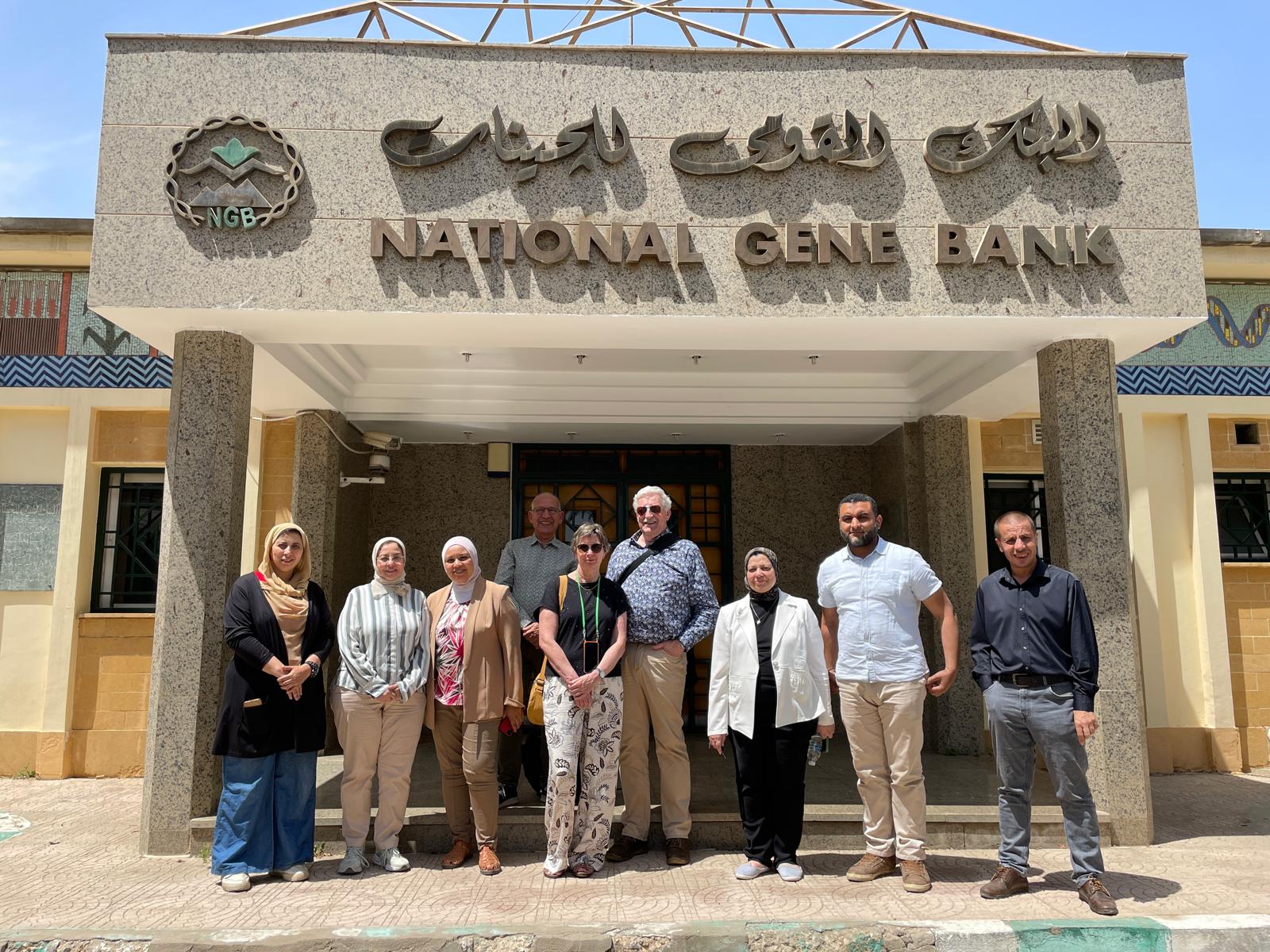
In line with the directives of H.E. Mr. Alaa Farouk, Minister of Agriculture and Land Reclamation, and under the patronage of Prof. Dr. Adel Abdelazim, President of the Agricultural Research Center, the National Gene Bank received Dr. Liu Chuny, President of the National Forestry Academy of China, along with the accompanying Chinese and Egyptian delegations.
The Arab Republic of Egypt, in cooperation with the International Treaty on Plant Genetic Resources for Food and Agriculture (ITPGRFA) and under the organization of the National Gene Bank at the Agricultural Research Center, hosted the Near East Regional Preparatory Meeting from 4 to 5 November 2025, in preparation for the Eleventh Meeting of the Governing Body of the ITPGRFA.
As part of the ongoing extension and training activities conducted by the National Gene Bank under the supervision of Prof. Dr. Nevine Abdel Fattah Hassan – Director of the National Gene Bank, Prof. Dr. Soliman Abdel-Maaboud Arab – Deputy Director for Extension and Training, and Dr. Hossam Abdel-Maksoud Sayed – Deputy Director for Research Affairs, the Bank received on Monday, September 3, 2025, a group of 15 students from the Faculty of Agriculture, Ain Shams University, and on Wednesday, September 5, 2025, a group of 40 students from the Faculty of Agriculture (Girls), Al-Azhar University.
In alignment with the directives of H.E. Mr. Alaa Farouk, Minister of Agriculture and Land Reclamation, and under the patronage of Prof. Dr. Adel Abdel Azim, President of the Agricultural Research Center, the National Gene Bank of Egypt (NGB) welcomed a delegation from Wageningen University in the Netherlands. The visit aimed to strengthen international cooperation in the field of plant breeding and explore opportunities for future collaboration.
(NGB) welcomed students from the Faculty of Agriculture, Suez Canal University—specifically from the Department of Agronomy and Horticulture—for an educational visit to learn about the bank’s diverse activities and its vital role in preserving plant and genetic resources, as well as maintaining the high quality of cultivated plant varieties in Egypt.
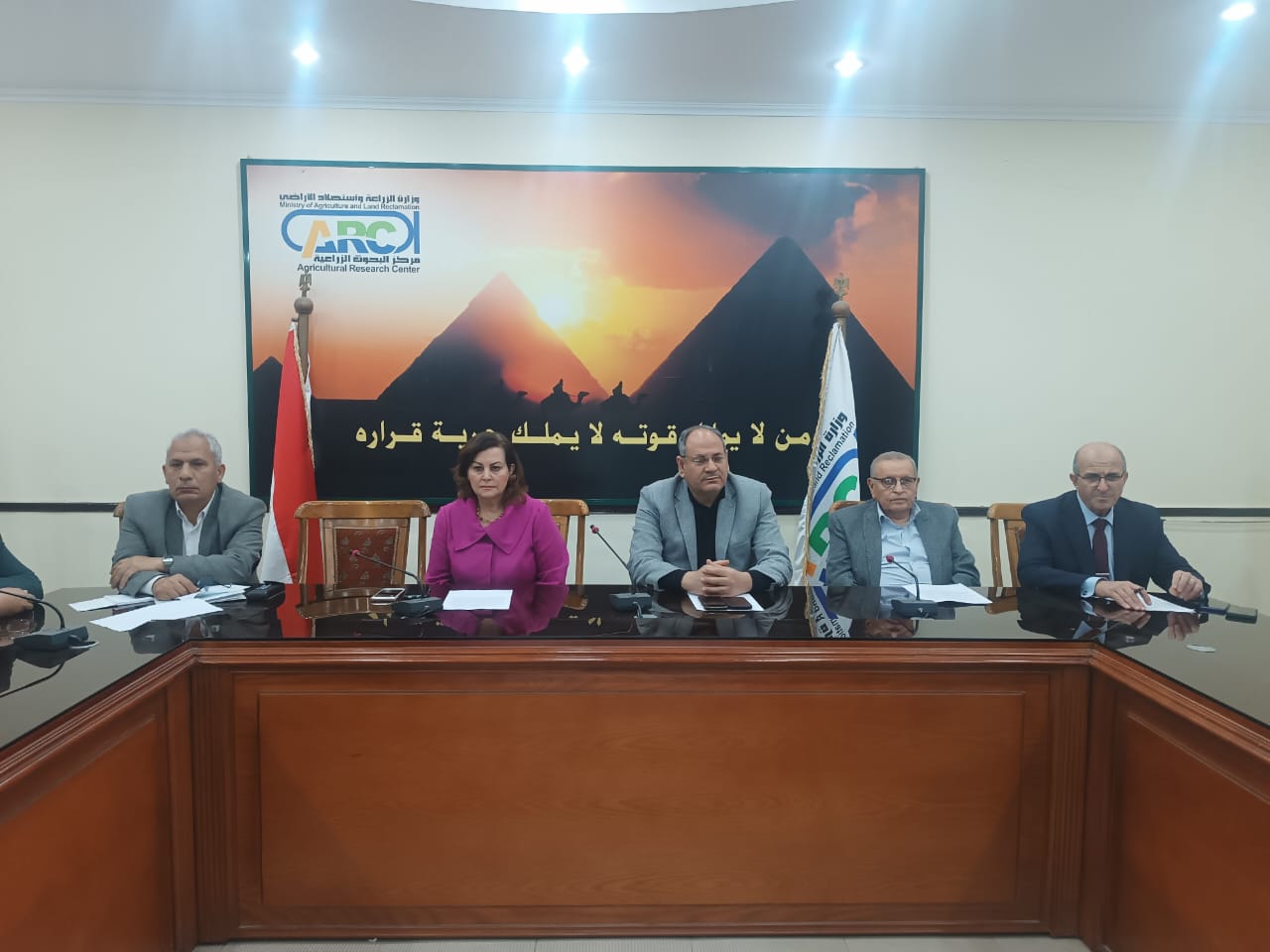
As part of the directives of Mr. Alaa Farouk, Minister of Agriculture and Land Reclamation, to restructure the Animal Breed Registration and Improvement Committee, Dr. Adel Abdel Azim, President of the Agricultural Research Center (ARC), chaired the committee’s second meeting to discuss key topics related to the development and enhancement of Egypt’s animal genetic resources.
The meeting was attended by:
Dr. Sherine Assem, Deputy President of ARC
Dr. Mona Mehrez, Former Deputy Minister of Agriculture
Dr. Tarek Soliman, Head of the Animal and Poultry Wealth Development Sector
Dr. Mohamed El-Shafie, Director of the Animal Production Research Institute and Committee Rapporteur
Directors of the Animal Wealth Institutes, the Agricultural Genetic Engineering Research Institute, the National Gene Bank, and the Regional Center for Food and Feed
Several prominent experts, including:
Prof. Dr. Maher Hasab El-Naby
Prof. Dr. Adel Abu El-Naga
Prof. Dr. Abdel Rashid Ghanem, Director of the National Milk Collection Centers Project
Dr. Adel Abdel Azim, President of the Agricultural Research Center (ARC) and Chair of the Animal Breed Registration Committee, held the committee’s first preparatory meeting. The meeting was attended by several distinguished experts and leaders, including:
Dr. Maher El-Maghraby, Vice President of ARC for Production
Dr. Mona Mehrez, Former Deputy Minister of Agriculture for Animal Wealth
Dr. Tarek Soliman, Head of the Animal Wealth Sector
Dr. Mohamed El-Shafie, Director of the Animal Production Research Institute and Committee Rapporteur
Dr. Mohamed Saad, Director of the Veterinary Serum and Vaccine Research Institute
Dr. Mostafa Fadel, Director of Animal Reproduction Research
Dr. Gehan Hosny, Director of the Agricultural Genetic Engineering Research Institute
Dr. Nevine Abdel Fattah, Director of the National Gene Bank
Dr. Mohamed El-Sherbiny, Director of the Regional Center for Food and Feed
Dr. Farid Istino, Professor of Poultry Breeding, Faculty of Agriculture, Cairo University
Dr. Essam Omar, Chief Researcher at the Animal Production Research Institute and genetic resources expert
The hidden world of microbes and their role in sustainable farming
When people think of gene banks, they often picture seed storage, but did you know that microorganisms are just as important? At NGB’s Microbiology Lab, researchers are collecting and studying bacteria, fungi, and algae that play crucial roles in soil health, disease control, and crop productivity.
The strategy depends on the continuity of ensuring the quality of long-term seed preservation
Objective
Diagnosing plant diseases and studying the various symptoms of plants in order to differentiate between them and healthy plants to be prepared for preservation.
Isolating plant pathogens, and identifying the actual pathogen, thus facilitating the process of implementing control programs.
Enriching the microbial wealth with new isolates that have an interactive effect with the plant.
It helps to study varieties that are resistant to diseases and pests at the genetic level.
Helping to identify diseases and infections that are already present in various crops under Egyptian soil conditions. It has a role in agricultural guidance and providing recommendations on how to deal with disease problems, whether in the field, greenhouse, or laboratory, and also during various preservation methods.
The role of Lab/Dept
The primary role of the phytosanitary laboratory in gene banks is to ensure that plant samples are free and safe from diseases and pests before preserving them in the long term.
Laboratory scientific equipment
Oven
Incubator
Microwave
Seed counter
3 balances
Safety cabinet
Thermo cycle PCR
Vortex
Hot plate
Microtome
Centrifuge
Microscope
Water purification system
W3Deep freezer
autoclave
electrophoresis cell
power supply
2 germinator
3 Growth chamber
Staff
Dr. Heba Hamdi Hammad Afifi +20 100 069 1522 hebaafifi160@gmail.com
The Seed Viability Testing Laboratory at National Genes Bank plays a crucial role in ensuring the quality and longevity of seed accessions. Our laboratory specializes in evaluating seed viability and germination rates, utilizing advanced techniques in seed production technology, molecular biology, and Nano-biology. We are dedicated to enhancing seed quality and viability during storage and improving seed resistance to both biotic and abiotic environmental stresses.
Strategy
Our strategy focuses on blending scientific research with practical applications in seed viability testing and quality assurance during storage. By partnering with local and international organizations, we aim to deepen our understanding of seed biology and enhance sustainable conservation techniques. This ensures that our seed bank remains a valuable resource for future generations.
Objective
Maintain the genetic integrity of seed collections by accurately determining seed viability and implementing optimal storage conditions. This involves a combination of traditional seed testing techniques and advanced molecular biology methods by:
Enhancing Seed Conservation Protocols: Developing cutting-edge methods to extend the viability of stored seeds.
Assessing Seed Viability: Determining the viability of accession seeds at the start of storage.
Regeneration Timing: Predicting optimal times for seed regeneration by conducting regular viability tests.
Adhering to Standards: Implementing the rules and appropriate standards for seed testing set by the International Seed Testing Association (ISTA), the Association of Official Seed Analysts (AOSA), and the Genebank Standards for Plant Genetic Resources for Food and Agriculture.
The role of Lab/Dept
Seed Viability Assessment: Conducting regular assessments to determine the percentage of viable seeds and identify potential deterioration.
Storage Condition Optimization: Recommending optimal storage conditions, such as temperature and humidity, to prolong seed longevity.
Research and Development: Engaging in research to develop innovative techniques for seed preservation and to improve our understanding of seed biology.
Quality Control: Implementing strict quality control measures to ensure the accuracy and reliability of testing results.
International Collaboration: Collaborating with international organizations and researchers to share knowledge and best practices.
Our Research Focuses On
Seed Preservation Techniques: Developing modern methods for seed preservation that leverage molecular and nanotechnology.
Biochemical Analysis: Investigating biochemical changes in seeds during storage to enhance quality.
Natural Compounds: Understanding the role of natural compounds in seed crops and their applications.
Genetic Diversity: Exploring the genetic basis of metabolic diversity in seeds to develop conservation and adaptation strategies.
Laboratory scientific equipment
The laboratory is equipped with state-of-the-art equipment to carry out its functions effectively:
Germination Chambers: Controlled environment chambers that simulate optimal conditions for seed germination.
Microscopes: Used for detailed examination of seed morphology and viability.
Analytical Balances: For precise measurements of seed weight and moisture content.
Oven: For drying samples and conducting moisture content tests.
Molecular Biology Equipment: Includes PCR machines and gel electrophoresis systems for advanced genetic analysis.
Other Specialized Equipment: Such as seed counters, seed cutters, and various laboratory glassware.
Seed Testing Services
Viability and Vigor Tests: Assess the potential for seeds to germinate and grow vigorously.
Germination Test: Measures the percentage of seeds that germinate under controlled conditions.
Rate of Germination: Evaluates how quickly seeds germinate.
Germination Duration Test: Assesses the time taken for seeds to germinate fully.
Tetrazolium (TZ) Test: A biochemical test to determine seed viability based on enzyme activity.
Seed Quality Test: General assessment of seed health, including purity and viability.
Accelerated Aging Test: Simulates aging conditions to predict seed longevity and performance.
Conductivity Test: Measures the electrical conductivity of seed leachate to assess seed damage.
Purity and Identification: Evaluates the composition of seed lots and identifies seed species.
Expected Storage Period of Seeds Test: Estimates how long seeds can be stored while maintaining quality.
Genetic Traits and Varietal Identification: Identifies genetic makeup and variety of seeds.
Thermogradient Germination Test: Tests germination across a temperature gradient to assess tolerance.
Other Specialty Tests: Additional tests tailored to specific seed types or requirements.