The strategy depends on the continuity of ensuring the quality of long-term seed preservation
Objective
Diagnosing plant diseases and studying the various symptoms of plants in order to differentiate between them and healthy plants to be prepared for preservation.
Isolating plant pathogens, and identifying the actual pathogen, thus facilitating the process of implementing control programs.
Enriching the microbial wealth with new isolates that have an interactive effect with the plant.
It helps to study varieties that are resistant to diseases and pests at the genetic level.
Helping to identify diseases and infections that are already present in various crops under Egyptian soil conditions. It has a role in agricultural guidance and providing recommendations on how to deal with disease problems, whether in the field, greenhouse, or laboratory, and also during various preservation methods.
The role of Lab/Dept
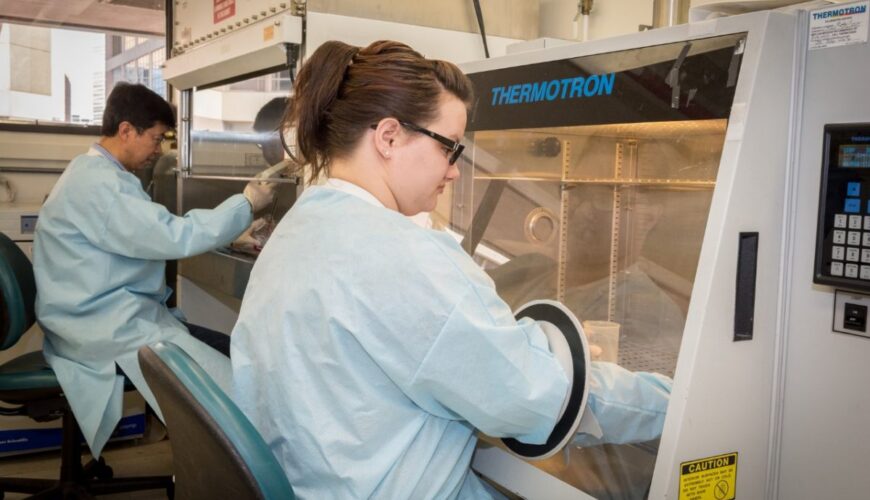
The primary role of the phytosanitary laboratory in gene banks is to ensure that plant samples are free and safe from diseases and pests before preserving them in the long term.
Laboratory scientific equipment
Oven
Incubator
Microwave
Seed counter
3 balances
Safety cabinet
Thermo cycle PCR
Vortex
Hot plate
Microtome
Centrifuge
Microscope
Water purification system
W3Deep freezer
autoclave
electrophoresis cell
power supply
2 germinator
3 Growth chamber
Staff
Dr. Heba Hamdi Hammad Afifi +20 100 069 1522 hebaafifi160@gmail.com
The Seed Viability Testing Laboratory at National Genes Bank plays a crucial role in ensuring the quality and longevity of seed accessions. Our laboratory specializes in evaluating seed viability and germination rates, utilizing advanced techniques in seed production technology, molecular biology, and Nano-biology. We are dedicated to enhancing seed quality and viability during storage and improving seed resistance to both biotic and abiotic environmental stresses.
Strategy
Our strategy focuses on blending scientific research with practical applications in seed viability testing and quality assurance during storage. By partnering with local and international organizations, we aim to deepen our understanding of seed biology and enhance sustainable conservation techniques. This ensures that our seed bank remains a valuable resource for future generations.
Objective
Maintain the genetic integrity of seed collections by accurately determining seed viability and implementing optimal storage conditions. This involves a combination of traditional seed testing techniques and advanced molecular biology methods by:
Enhancing Seed Conservation Protocols: Developing cutting-edge methods to extend the viability of stored seeds.
Assessing Seed Viability: Determining the viability of accession seeds at the start of storage.
Regeneration Timing: Predicting optimal times for seed regeneration by conducting regular viability tests.
Adhering to Standards: Implementing the rules and appropriate standards for seed testing set by the International Seed Testing Association (ISTA), the Association of Official Seed Analysts (AOSA), and the Genebank Standards for Plant Genetic Resources for Food and Agriculture.
The role of Lab/Dept
Seed Viability Assessment: Conducting regular assessments to determine the percentage of viable seeds and identify potential deterioration.
Storage Condition Optimization: Recommending optimal storage conditions, such as temperature and humidity, to prolong seed longevity.
Research and Development: Engaging in research to develop innovative techniques for seed preservation and to improve our understanding of seed biology.
Quality Control: Implementing strict quality control measures to ensure the accuracy and reliability of testing results.
International Collaboration: Collaborating with international organizations and researchers to share knowledge and best practices.
Our Research Focuses On
Seed Preservation Techniques: Developing modern methods for seed preservation that leverage molecular and nanotechnology.
Biochemical Analysis: Investigating biochemical changes in seeds during storage to enhance quality.
Natural Compounds: Understanding the role of natural compounds in seed crops and their applications.
Genetic Diversity: Exploring the genetic basis of metabolic diversity in seeds to develop conservation and adaptation strategies.
Laboratory scientific equipment
The laboratory is equipped with state-of-the-art equipment to carry out its functions effectively:
Germination Chambers: Controlled environment chambers that simulate optimal conditions for seed germination.
Microscopes: Used for detailed examination of seed morphology and viability.
Analytical Balances: For precise measurements of seed weight and moisture content.
Oven: For drying samples and conducting moisture content tests.
Molecular Biology Equipment: Includes PCR machines and gel electrophoresis systems for advanced genetic analysis.
Other Specialized Equipment: Such as seed counters, seed cutters, and various laboratory glassware.
Seed Testing Services
Viability and Vigor Tests: Assess the potential for seeds to germinate and grow vigorously.
Germination Test: Measures the percentage of seeds that germinate under controlled conditions.
Rate of Germination: Evaluates how quickly seeds germinate.
Germination Duration Test: Assesses the time taken for seeds to germinate fully.
Tetrazolium (TZ) Test: A biochemical test to determine seed viability based on enzyme activity.
Seed Quality Test: General assessment of seed health, including purity and viability.
Accelerated Aging Test: Simulates aging conditions to predict seed longevity and performance.
Conductivity Test: Measures the electrical conductivity of seed leachate to assess seed damage.
Purity and Identification: Evaluates the composition of seed lots and identifies seed species.
Expected Storage Period of Seeds Test: Estimates how long seeds can be stored while maintaining quality.
Genetic Traits and Varietal Identification: Identifies genetic makeup and variety of seeds.
Thermogradient Germination Test: Tests germination across a temperature gradient to assess tolerance.
Other Specialty Tests: Additional tests tailored to specific seed types or requirements.
Specialized in collecting, isolating and identifying microbial genetic resources and evaluating their role, environmental impact and various applications in the fields of (agriculture, pharmacy, food). In addition to identifying the different genes specific to microorganisms. Preserving microbial genetic resources in various ways and continuously evaluating them.
Strategy
Collection and Preservation of microbial isolates
Characterization the collected microbial isolates.
Documentation and Database Management: Keeping detailed records of each strain, including its origin, characteristics, and storage conditions.
Utilization and Research Support: Partnering with academic and industry researchers to promote the use of microbial strains for various applications
Capacity Building and Training: Offering training for researchers and technicians on best practices for microbial resource management
Sustainability and Ethical Considerations: Evaluating the ecological impact of collecting and using microbial resources
Objectives
Conservation of Biodiversity: Preserve a wide range of microbial species and strains to maintain genetic diversity.
Utilization for Biotechnological Applications: Promote the use of microbial strains in industrial applications.
Support for Agriculture: Enhance agricultural productivity and sustainability by providing microbial strains that promote plant growth, improve soil health, and reduce disease severity.
Microbiology Lab roles
microbiology lab at a gene bank plays a critical part in the conservation, characterization, and application of microbial genetic resources, supporting both scientific advancement and sustainable practices.
Laboratory scientific equipment
– Laminar flow
– Fluorescent microscope – Convention PCR
Staff
Dr. Fayrouz Hassan Abd Elmeged drfayrouz_ngb@outlook.com
Dr. Akram Hassan Mohamed akramhassan8787@gmail.com
Plant tissue culture is a collection of techniques used to maintain or grow plant cells, tissues or organs under sterile conditions on a nutrient culture medium of known composition. Plant tissue culture is widely used to produce clones of a plant in a method known as Micropropagation. Tissue culture of plants refers to the growing and multiplication of plant cells tissues and organs on defined solid or liquid media for the production of high-quality uniform and disease-free plants. Moreover, tissue culture techniques are used for medium-term and long-term preservations including cryopreservation.
Objectives
Micropropagation of rare and endangered species.
Micropropagation of vegetative propagated species.
Micropropagation of recalcitrant seed-producing species.
in vitro medium-term preservation.
Long-term preservation (cryopreservation).
STAGES OF PLANT TISSUE CULTURE
Establishment stage
Multiplication stage
Rooting stage
Acclimatization stage
Staff
Prof. Dr. Neveen Abd El-Fattah Hassan +20 114 348 5555 niveen2020@hotmail.com
Dr. Ahmed Abd El-Wahab Mohamed El-Homosany +20 100 828 8309 a-homos2007@hotmail.com
Dr. Ahmed Mahmoud Haggag Abdelazim +20 114 071 4907 Ahmedhagag56@yahoo.com
The department is concerned with the genetic resources of horticultural crops presented in Egypt to preserve them from deterioration and extinction. This department includes:
Fruit crops
Vegetable crops
Medicinal and aromatic plants
Timber trees and ornamental plants
Strategy
Developing an action plan for integrated management of horticultural genetic resources targeted and cooperating with all the farms, gardens, orchards of local and regional to collect and exchange different samples of these plants.
Objectives
Survey, collection, propagation, evaluation and conservation of horticultural crops’ genetic resources, prioritizing the endemic and endangered ones.
Identification and description of the horticultural crops’ genetic resources.
Follow up and maintenance of the endangered and rare species in their natural habitat (in-situ).
Mapping, maintenance, and documentation of the endemic and near-endemic horticultural species, to preserve the national intellectual properties.
Evaluating the collected horticultural germplasms against different stresses and maximizing its nutritional, medicinal and environmental values.
Plan of Action
Carry out missions and scientific expeditions to explore the collection of plant genetic resources.
Determine the distribution and the whereabouts of plants in cooperation with the relevant authorities.
The collection of seeds and seedlings of the mind and the existing plants during trips combined with relevant.
Exchanging horticultural crop samples with other entities in Egypt and abroad. Studying the environmental conditions of different regions in the Arab Republic of Egypt to identify the optimum factors affecting plant genetic resources.
Determining the current status of the state of biodiversity in Egypt.
Training and capacity building and the establishment of specialized workshops and scientific conferences in cooperation with the competent authorities
Greenhouses
Greenhouse is a building designed with specific properties for the protection of tender or out-of-season plants against climatic variations in the open environment. On the other hand, it could be considered a perfect tool for preserving different plant genetic resources in Gene banks, especially for those species that couldn’t produce viable seeds under local conditions. So, it should be preserved as intact plants. In the Egyptian National Gene Bank (NGB), well designed and equipped greenhouse was allocated for conserving a huge number of timber trees, ornamental, medicinal and aromatic plants. Such species have been collected from all around Egypt. This germplasm collection of NGB greenhouse comprised about 83 plant families, 177 genera, and 226 species. Some of these species (wild or cultivated) are rare and endangered with high economical, medicinal and aesthetic values. The collected species including propagating materials (seeds, cuttings, bulbs,), seedlings and transplants are legally acquired with healthy condition to ensure high quality growth. After collecting and transferring to the NGB greenhouse, the collected materials are scientifically identified, documented, cultivated and supplied with different growth factors. Daily agricultural processes inside NGB are done including irrigation, controlling pests and diseases, fertilizing, etc., this is vital to ensure perfect growth of the collected plant materials. Propagation of these species is a very important process that is periodically done in the NGB greenhouse. These germplasms deposited inside NGB are available for students, researchers, gardeners, breeders, and other academic affiliations for scientific purposes as well as for exchange with new species. To ensure high performance of NGB greenhouse, growing factors (light, humidity and temperature) are completely controlled.
Botanical Garden
A small botanical garden is attached to the ENGB greenhouse, allocated for growing mature plants which become large in size and not suitable for the growth inside ENGB greenhouse. About 52 families, 134 genera and 155 species are located in the garden attached to this greenhouse.
Staff
Dr. Hossam Abd El-Maksoud Sayed Ahmed +20 112 158 5000 hosam722000yahoo.com
Dr. Tarek Mohamed Noor El-Deen Ahmed +20 100 115 1682 tarek.noor@arc.sci.eg
Genetic resources are the biological basis of global food security and directly or indirectly support human livelihoods through the food, medicine, animal feed, fibre, clothing, housing, energy and many other products and services they provide. They consist of the diversity of genetic material present in traditional varieties and modern plant stocks, as well as crop wild relatives and other natural plant species that It can be used now or in the future for food and agriculture.
Objective
Collecting and conserving plant genetic resources, from erosion and extinction.
Exchanging information concerning genetic resources with local and international gene banks.
Identifying the core collection of genetic resources that can be utilized in both public and private research and breeding programs.
Developing plans for a collection of genetic resources to ensure the safety of these resources and to provide the different breeding programs with the required genetic materials and relative information.
Characterization of the collected genetic resources.
To address the prevailing conditions of climate change for agricultural research and breeding towards achieving food security.
Strengthen the international cooperation in the field of genetic resources.
Enhancing public awareness of genetic resources maintenance to protect the national resources against erosion and to regulate the utilization of such resources.
Participating in exploration missions intended for collecting genetic resources from their native habitat.
Facilitating the exchange of genetic resources and implementation of the intellectual property legislation concerning national genetic resources.
Documenting the Egyptian genetic resources on the NGB database.
Activities
Seeds storage
In the NGB, two different forms of packing are used: plastic packing is used in both the active storage room (-5), as well as the temporary storage room (+5). while we are using specialized aluminum foil at the base storage room (-20) to preserve the samples in cold storage for an extended period.
Characterization
The description must be in the way that the breeder and the various breeding programs are benefited from; there are morphological traits with high hereditary ability that are important in breeding programs, and there are various other traits of high agricultural value that must also be recorded to characterise and identify those inputs and make full use of those genetic resources.
Notable: Characterization is carried out using international models UPOV- IPGRI.
Evaluation
It is the process of testing genetic resources by evaluating the important genetic traits carried by these germplasms that are affected by different degrees under 9 different environmental conditions such as resistance to pests and diseases or the quality of their seeds. Also, the assessment of all genetic resources for their tolerance to adverse conditions (such as tolerance to salinity – drought – heat) and vital stresses (such as: tolerance to disease, insect and pest infestation) in different regions.
Regeneration
Propagation is a major process and an integral part of the responsibility of any genebank that maintains traditional seeds. It is a process that increases the seeds (A) (B) 8 stored in the genebank and/or increases the viability of the seeds to equal or greater than the agreed minimum level. The sample is renewed if it no longer contains enough seeds for long-term storage (i.e. 1,500 seeds for self-pollinating species and 3,000 for out crossings) or when its viability falls below a specified minimum threshold (i.e., less than 85 percent of initial germination of stocked seeds). And if the demand for one of the registered samples is rare and its validity is impeccable, then the number of seeds can reach less than 1000 before renewal. Regeneration should be performed when viability drops below 85 percent of the original viability or when the amount of seed remaining is less than necessary for three cycles of the representative population of Bank-registered samples and the oldest original sample specimen should be used for regeneration of registered samples.
distribution
Gene banks aim to make available to users as many recorded samples as possible, including associated data. If stocks are depleted, samples should be multiplied to meet user demands as a matter of priority, and gene banks that maintain working collections should enhance the availability of genetic resources for uses including research, breeding, education, agriculture and reintroduction. At the international level, gene banks can be a source for providing supplies of wild origin PGR to countries that are setting up their own gene banks.
Seeds are distributed in compliance with national laws and relevant international treaties and agreements.
Submit seed samples with all relevant documents required by the recipient country
The time between receiving a seed request and sending, it is kept to a minimum
Staff
Prof. Dr. Soliman Abdelmaaboud Abdelmaaboud Arab +20 100 322 5345 Solimanngb@gmail.com
The majority of livestock integrates with crops in small holding that represent approximately 85%of its total population. the average farmer owns 1.02 buffalo cows, 0.53growing buffalo calves, 0.94 bovine cows, 0.51bovine calves, 1014 sheep 1.06 goat, number of different poultry of different species plus donkeyes and camels / or horses. The evolutionary forces of mutation, selective breeding, adaptation, isolation and genetic drift have created an enormous diversity of local populations. Livestock provide meat, milk, eggs, fibers, skins, manure for fertilizer and fuel, draught power for cultivation and transport, and a range of other products and services. Livestock biodiversity is essential to food and livelihood security, particularly in the developing world.
Animal production systems in Egypt
Semi intensive / intensive system (delta and Nile valley) mainly large ruminants, small ruminants, a number of different poultry of different species pluse donkeys and camel and / or horses.
Intensive system (poultry and dairy cattle).
Zaraba (around cities) dairy buffalo and goats.
Extensive system (Sinai, north western coastal zone, halaieb and shalatein mainly small ruminants and camels.
The states of breeds at risk
Population size of local cattle and buffalo breeds are quite stable and no indication that one of these breeds is at risk. Except Domiati cattle which could be at risk according to decrease of its population.
The major local breeds of sheep and goat do not seem at risk. The exception is zaribi breed which could be at risk as all available reports indicate deceasing of its population. The breeds of camel, horse, donkey, chicken, duck, goose, are not at risk.
Two local breeds of rabbits have already become extinct, Giza White and Baladi White and two more are endangered, Baladi Red and Baladi Black.
Main constraints facing establishment of national conservation program
Fragmented ownership of livestock.
Lack of recording of animal pedigrees / performance
Lack of applying uniform protocols for collection of germplasm and cryopreservation programs in each breed.
Lack of the accurate information about genetic characterization of our native breeds.
Lack of public understanding and awareness of the role and values of AnGR.
Lack of legislation and regulation affecting the maintenance of AnGR.
The main objective of the department
Genetic characterization of our native breeds.
Standardization of protocols for collection of germplasm, through well- defined and sound cryopreservation programs for each breed.
To rescue and increase the population of endangered breeds. (Red and Black rabbit and Zeraibi goats)
Establishing data base system for information on native breeds characterization.
This includes information on breeds population, description and qualifications.
Emphasis will be on traits related to meat quality, mothering ability and adaptation to harsh climate and poor environmental conditions.
Increasing the awareness of public for the importance of our rescue mission and to the necessity of maintaining these breeds as a gene pool for future use in rapidly changing world.
The magazine published by the Gene Bank.
Pamphlets published by Gene Bank.
Publication in the newspapers.
Publication in the agricultural magazine.
Current activity
Genetic characterization of Sohagi sheep, Barki Sheep and buffalo.
Cryopreservation studies for semen of chicken, Ducks, Turkey and Camel embryo.
Determining some genetic loci of productive traits in some indigenes chicken breeds using microsatellite markers.
4-National gene bank performing of project based on integration of genetic resources management in western desert communities including farm animal genetic resources (Genetic characterization for wild-type of cattle, sheep and goats) in four oases namely El-Kharga, El-Dakhla, El-Farafra and Siwa.
Achievements of Animal Genetic Resources Department
Genetic characterization of chicken breeds and development strains: Among Fayuomi breed (PP, GG and RR). Fayuomi breed Dandarawi breed Gimiza strain Inshas strain Doki-4 strain Golden Montazah strain Silver Montazah strain Mamorah strain Mandara strain Bahij strain Matrouh strain El-salam strain Bandarah strain Sinai strains
Determining some genetic loci of egg production traits in Fayoumi and Dandrawi chicken breeds using microsatellite markers (Ph.D. Thesis).
Variation and phylogeny studies of Egyptian River Buffalo by mitochondrial D-loop nucleotide sequences.
Semen Quality and Freezing of Sohagi Rams in Egypt
Staff
Prof. Dr. Khaled Roushdy Mohamed Mousa +20 114 331 7188 khromod@yahoo.com
Prof. Dr. Mohammed Ahmed El-sayed Hasan +20 109 966 1610 m.a.el_sayed@outlook.com
Dr. Alsayed Alsoudy Mohamed Mostafa +20 155 831 3399 alsayedalsoudy@gmail.com
Dr. Heba Abd EL-Wahab Mahmoud Assi +20 100 824 5305 Music.art723@gmail.com
The main objectives of the cytogenetics Laboratory are focused on the investigation of cytological disturbances and genetic disorders. These could be achieved through the study of:
Mitotic activity, frequency of micronuclei and the chromosomal aberrations in mitotic cell divisions as an indication of the adaptability to the Egyptian conditions in varieties, landraces and/or accessions
Meiotic irregularities, frequency of micronuclei and the chromosomal aberrations in meiotic cell divisions as an indication of the cytological instability in varieties, landraces and/or accessions. Moreover, to detect any existing association between the cytological and instabilities and agronomic characters.
Testing the pollen grain viability of different varieties, landraces and/or accessions.
Determination of chiasma frequency to test the recombination potential in varieties, landraces and/or accessions.
Investigate the chromosomal maps of wild plants, animals and landraces which can be utilized in the different breeding programs.
Study the different field and agronomic cytogenetically as related to agronomic and morphological characteristics to conclude the degree of genetic stability.
Chromosomes morphological characterization
From the karyotype analysis, the two homologues (a and b) of each chromosome pair were judged according to similarities in length of short arm, long arm and total lengths and centromeric index percentage.
Microscope examination, karyotyping and idiograming
Chromosomes examination was performed using a vertical fluorescence microscope (Leica DM2500) equipped with a cooled monochrome digital camera (Leica DFC340FX). Twenty cells with clearly observable and well spread were examined and photographed at 100 × magnification under oil immersion. Chromosome counting and karyotyping were performed using the automated karyotyping & FISH software processing (Leica CW4000) system. Idiograms were constructed from complete chromosomes which showed the maximum possible banding patterns in at least ten different metaphase plates.
Staff
Dr. Mona Ebrahim Abd El-Gawad +20 100 917 0469 monagenetist2012@gmail.com
Dr. Muhammad Ibrahim +20 100 695 1737 maibrahim30@icloud.com
chemical analysis Laboratory is one of the most important laboratories in the National genes Bank, the work based on the evaluation and characterization of plant genetic resources according to their chemical composition to know the importance of each genetic resource and to identify the active substances contained in it, also measuring it’s concentration by using the most accurate methods and the latest scientific equipment.
Strategy
1. Discuss and study the latest laboratory methods for chemical analysis used in the detection of chemical components and their application to genetic resources found in the National gene Bank.
2. Documentation of data and results obtained after comparing them with specialized scientific references.
3. Participate in the training courses for university students and new researchers to give them the necessary expertise in the field of chemical analysis and chemical classification of plant genetic resources
Objective
1. Determine of active substances in each plant genetic resource.
2. Evaluation and characterization of plant genetic resources according to their chemical composition.
3. Study the effect of the environment surrounding each genetic resource on the chemical composition and interpretation of the relationship between them.
4. Entering Data and results of the chemical analysis tests of each Plant Genetic Resource into the National gene Bank database as a reference to return to it at any time.
5. Provide all the information and experiences in the field of chemical analysis for all researchers and those interested in this area with the exchange of experiences between our laboratory and other laboratories specializing in this field.
The role of the chemical analysis laboratory
Knowing the chemical composition of each Plant Genetic Resource is the most important step to be taken in the process of classification and description. In this point lays the importance of chemical analysis laboratory where this role is the main point of our work.
By using the latest scientific methods and equipment The laboratory paint a picture of the estimated chemical composition of each genetic resource and describe of the differences in chemical composition between plant genetic resources and each other as the results of the relationship between the environment surrounding each resource and its chemical composition and the active substances it contains.
Staff:
Prof. Dr. Abeer Ahmed Hamdy Elhalwagi abeerelhalwagi@gmail.com
Dr. Ali Hassan Ali Taha Anany ali.h_anany@yahoo.com
The Information Systems and Documentation Unit is a fundamental pillar of the gene bank, playing a vital role in organizing and managing data related to plant genetic resources. The unit aims to ensure the collection, documentation, preservation, and regular updating of all relevant information on plant genetic materials. This includes genetic, morphological, environmental, and geographical data, as well as information on conservation, maintenance, and distribution. Through the development of integrated and modern databases, the unit enables the tracking of each genetic accession from the moment it enters the bank until it is used in research, multiplication, or distribution activities. It also works to align these data with international standards, such as those adopted by the FAO and the global information system for plant genetic resources (GENESYS), contributing to enhanced transparency and data sharing at both national and international levels.
In addition, the unit facilitates access to genetic resources through interactive digital platforms that allow researchers, decision-makers, and farmers to explore the available genetic diversity and analyze data using intelligent tools that support scientific and agricultural decision-making. It also plays an important role in documenting traditional knowledge related to the agricultural and medicinal uses of local plants, ensuring its transmission to future generations and protecting it from loss. The unit is committed to keeping pace with technological advances by utilizing advanced database management systems and artificial intelligence technologies to analyze data and predict the behavior of genetic materials under varying environmental conditions, thereby enhancing the efficiency of conservation efforts and adaptation to climate change.
In summary, the Information Systems and Documentation Unit represents the backbone of efforts to conserve and sustainably use plant genetic resources, integrating technology and knowledge to safeguard our genetic wealth and ensure its continued contribution to food security and agricultural sovereignty..
Staff
Dr. Waleed Maged Mohamed +20 111 198 1807 waleedmaged8@gmail.com